How to Hang Christmas Lights on Brick & Stucco Without Nails (2026 Guide)
How to hang Christmas lights on brick, stucco, and siding without drilling or nails — adhesive clips, brick clips, magnets, and honest trade-offs for 2026.
This article contains affiliate links. If you purchase through these links, we may earn a commission at no extra cost to you. Learn more.
Quick picks from this guide
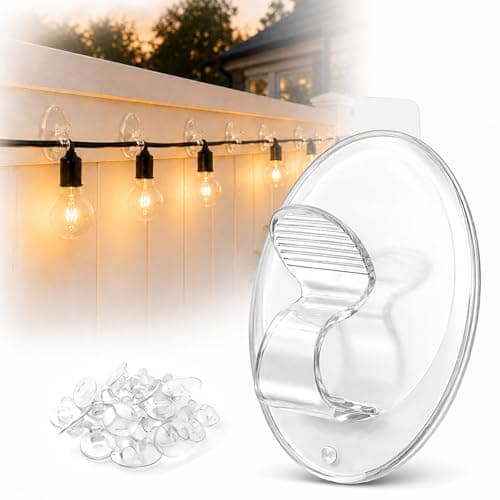
No-Drill Adhesive Light Clips
A 20-piece pack of clear, heavy-duty clips advertised with a waterproof adhesive, 3X stronger adhesion, and no drilling required — the veri…
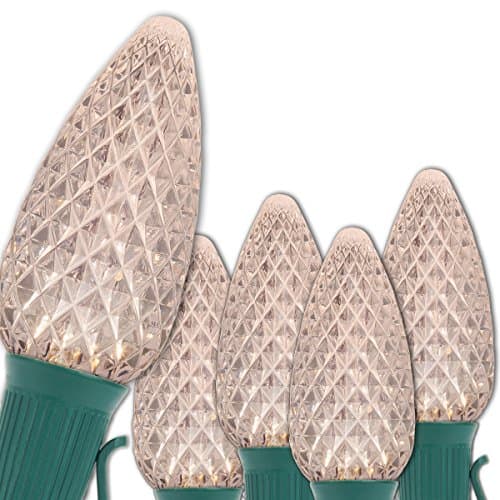
Wintergreen C9 OptiCore Commercial (Bold Outline)
A 25-foot heavy-duty set of 25 warm-white C9 bulbs on green wire.
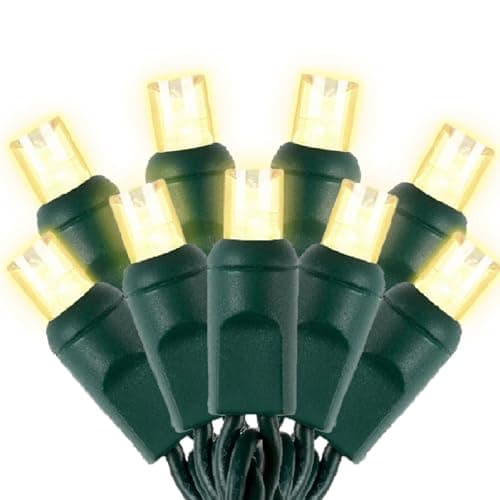
Warm White LED 50ft Commercial (Long Continuous Runs)
Fifty feet of 100-count warm-white LEDs on green wire, rated commercial grade with a 5mm wide-angle bulb, UL listing, and IP65 waterproofin…
| Method | Works best on | Holding strength notes | Removal |
|---|---|---|---|
| Adhesive light clips | Smooth or lightly textured, sealed/painted brick, stucco, and siding | Strong on a clean, dry, warm surface; check the pack's own rating for the load | Peel off; residue-free removal per the pack's claim |
| Brick clips (grip the brick lip) | Standard brick with a raised lip or ledge between courses | Mechanical grip, no adhesive — holds independent of temperature | Slide off; no residue |
| Hot glue | Bare brick and masonry | Bonds firmly to rough surfaces | Can leave residue and may pull off surface flakes — the honest weak point |
| Magnetic hooks | Steel lintels, metal garage doors, iron railings | Strong on ferrous metal only; useless on brick or stucco | Lift off; no residue |
Brick and stucco are where a lot of Christmas light plans quietly stall. The lights are bought, the strands are tested, and then comes the realization that there's nothing obvious to hang them from — no gutter lip within reach, no fascia edge, just a flat masonry wall that a homeowner is reasonably reluctant to start drilling holes into. The instinct to reach for a hammer or a masonry bit is exactly the wrong one, and it's avoidable.
Every method in this guide is genuinely no-drill: nothing gets nailed, screwed, or bored into the wall. That matters for the surface itself — a drilled hole in brick or mortar is permanent and a crack in stucco can let water in — and it matters for renters and anyone under an HOA, where visibly altering the exterior can breach a lease or a covenant. A clean, reversible install sidesteps all of it.
There's a timing angle too, and it's not filler. Adhesives — the workhorse of no-drill masonry mounting — bond best when the surface is warm and bone dry, and they need uncured hours before taking load. Applying them on a mild, dry summer afternoon gives a far more reliable bond than pressing a clip onto cold, damp brick the week before Christmas. Do the mounting now, let it cure, and the strands are ready to hang when the season arrives. For the roofline portion of a display, how to hang Christmas lights on a roof & gutters is the sibling technique guide; this one is the wall.
Why Not Nails or Screws?
It's worth being clear about what's actually wrong with the obvious approach, because "just use a masonry screw" gets suggested constantly.
- Masonry doesn't heal. A hole drilled into a brick face or a mortar joint is there for good. Even filled, it's visible, and repeated seasons of holes accumulate into a pockmarked wall.
- Stucco cracks and lets water in. Stucco is a thin cementitious skin over sheathing. Puncturing it opens a path for moisture behind the surface, and a small crack around a fastener can spread with freeze-thaw cycles into a real repair.
- Leases and HOAs. Drilling into an exterior wall is often exactly the kind of alteration a rental agreement or HOA covenant prohibits. A no-drill method that comes off without a trace keeps the whole project reversible and dispute-free.
- It's slower anyway. Drilling and anchoring masonry is more work than seating an adhesive clip, not less — the "permanent" approach loses on convenience too.
The rest of this guide is the set of methods that hold lights on masonry and metal without any of that.
The No-Drill Methods at a Glance
No single method covers every surface — the right choice depends on whether the wall is smooth or rough, sealed or raw, masonry or metal. The table sorts them out before the detail sections below.
A typical brick or stucco elevation ends up using two or three of these together — adhesive clips across the main field of the wall, magnets on a steel garage-door frame or lintel, and brick clips wherever a usable brick lip runs. Reaching high sections is a separate problem covered further down.
Adhesive Clips: The Main No-Drill Method
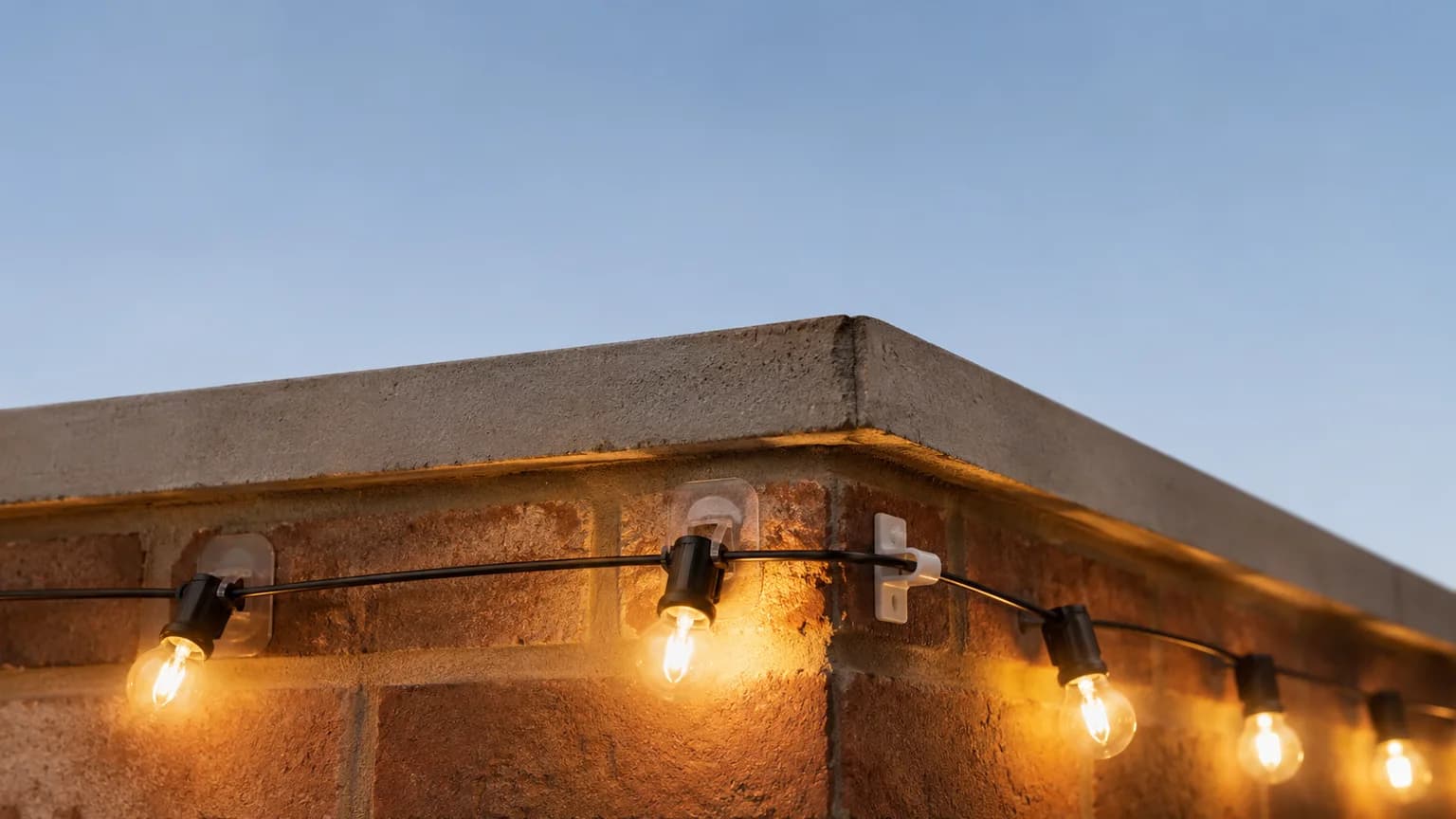
For most brick and stucco, adhesive-backed clips are the primary answer — a small clip with a strong adhesive pad on the back and a hook or slot on the front to hold the light socket or wire. Getting them to hold is almost entirely about surface prep and timing.
Surface prep. The adhesive can only grip what it actually touches. Wipe each spot clean of dust, cobwebs, and the fine grit that lives on masonry, let it dry fully, and skip any area of loose or flaking paint — the clip will bond to the flake, not the wall, and come down with it. A sealed, painted, or smooth-faced brick or a sound stucco surface is ideal; raw, deeply pitted brick is where adhesives struggle and a different method wins.
Temperature and cure time. Adhesives bond best warm and dry, which is the practical reason to mount in summer or early autumn rather than in the cold. Press each clip firmly for a few seconds to seat the bond, then — critically — leave the clips to cure for the time the packaging specifies before hanging any weight on them. Loading a clip the instant it's stuck, on a cold damp wall, is the single most common reason these fail.
Weight and spacing. Spread the load. A run held by a clip every foot or two puts almost nothing on each individual bond; a run sagging between clips placed too far apart concentrates force and pulls them off one by one. Don't assume a specific weight capacity — clip ratings vary by product, so check the pack's stated rating and stay well under it.
Removal. The good clips are designed to peel away cleanly at season's end without leaving adhesive behind, which is what makes them lease- and HOA-friendly. Removal is easiest when the adhesive is slightly warm and the clip is peeled slowly rather than yanked.
No-Drill Adhesive Light Clips ASIN: B0CG5BFCMC | Price: ~$12.99 Check price

A 20-piece pack of clear, heavy-duty clips advertised with a waterproof adhesive, 3X stronger adhesion, and no drilling required — the verified no-drill anchor for this whole approach, and its title also claims residue-free removal, which is the property that keeps a masonry install reversible. The clear body disappears against most wall colors. Honest limits: the pack doesn't publish a specific weight rating, so treat the load conservatively and check the packaging before committing a heavy run to a handful of clips; and like every adhesive, it wants a clean, dry, warm surface and won't do its best work on raw pitted brick or flaking paint.
Brick Clips That Grip the Brick Lip
There's an entire category of clip that skips adhesive altogether by using the geometry of the brickwork. Many brick walls have a slight lip or ledge where one course of brick steps back from the one below, or a raised mortar profile between courses — a brick clip is a spring-tensioned metal piece designed to hook over that lip and grip it mechanically, holding a light strand with no glue and no holes.
The appeal is real: because there's no adhesive, holding strength doesn't depend on temperature, surface dust, or cure time, and removal is simply sliding the clip back off — nothing left behind on the wall.
- They need the right brick. A brick clip only works where there's an actual lip or ledge to grip. Flush brickwork with no step, or a stucco wall, gives it nothing to hold, so this method is brick-specific and even then depends on the wall's profile.
- Match the clip to the lip depth. These clips come sized for different lip and mortar profiles; one that doesn't match the wall's geometry either won't seat or will slip.
- They coexist with adhesive clips. A common approach uses brick clips wherever a usable lip runs and fills the gaps — flush sections, corners, stucco returns — with adhesive clips.
This guide won't name a specific brick-clip product, since the verified roster doesn't include one — but the category is worth knowing by name at the store, because on the right brick it's the most durable no-drill option there is.
Hot Glue on Brick: Honest Trade-Offs
Hot glue genuinely works on bare, rough brick — a dab from a standard glue gun bonds a light clip or the strand itself firmly to a porous masonry surface, and it grips textured brick that adhesive-backed clips can struggle with. For a bare-brick wall with no lip to clip and too rough for adhesive pads, it's a real option, and it's cheap.
But the trade-offs are equally real and worth stating plainly before anyone reaches for the glue gun:
- Residue risk. Hot glue can leave a stubborn deposit on the brick, and on softer or painted masonry, pulling it off can lift a flake of the surface with it. That makes it a poor fit for a rental or an HOA property where a spotless removal matters.
- Cold-weather brittleness. Hardened glue gets brittle in the cold and can crack and release during a hard freeze — the opposite of the season it's needed in.
- It's slow and one-shot. Every point is glued individually and isn't repositionable once set, so a plan change means picking glue back off the wall.
The honest verdict: hot glue is a legitimate tool for bare, rough, owned brick where clips won't grip, and a poor choice anywhere clean removal or repositioning matters. When in doubt on a masonry surface that has to come back to bare, favor a mechanical brick clip or a tested adhesive clip over glue.
Magnetic Hooks on Metal
Wherever the exterior offers ferrous metal, magnets turn it into an instant no-drill anchor with zero surface risk. A magnetic hook holds a light strand on any steel surface and lifts straight off at the end of the season, leaving nothing behind.
- Steel garage doors are the biggest opportunity — a whole horizontal run of lights can hang from magnetic hooks across a metal door with no clips or glue at all.
- Steel lintels — the metal beam spanning the top of many garage openings, windows, and doors in brick homes — take a magnet cleanly and put a mounting point right where a brick wall otherwise offers none.
- Iron railings and metal trim round out the list of surfaces a magnet can use.
Two limits keep it honest: magnets only hold on ferrous metal, so an aluminum door or trim gives nothing to grip and needs testing with a magnet first; and wind load on an exposed run can walk a weaker magnet loose, so a hook rated for outdoor holding strength beats a craft magnet for a strand that has to survive a season of weather.
Reaching High Spots
Brick and stucco walls often run higher than a wrapped tree or a porch, and the safe way to place a clip up high without over-extending a ladder is an extendable light-hanging pole — a telescoping pole with a hook or clip-holder tip that positions a clip or lifts a strand onto a mount from the ground or a lower rung. It's a placement aid, not a fastener: the pole sets the adhesive clip, brick clip, or magnet that actually does the holding.
This guide won't name a specific pole model, as the verified roster doesn't include one, but the category is worth knowing — paired with any of the mounting methods above, it keeps the highest sections of a wall reachable without turning a light job into a precarious ladder stretch. The ladder-safety fundamentals that apply here are covered in full in the roof and gutters technique guide.
What to Hang: The Strands Themselves
The mounting method is only half the job — the other half is the light set it holds. Two commercial-grade options cover most brick and stucco elevations, and the right one depends on whether the goal is a bold architectural outline or a subtler continuous glow.
Wintergreen C9 OptiCore Commercial (Bold Outline) ASIN: B076JGBDPD | Price: ~$49.99 Check price

A 25-foot heavy-duty set of 25 warm-white C9 bulbs on green wire. The large C9 bulb throws distinct, bold points of light — well matched to outlining the strong horizontal and vertical lines of a brick or stucco elevation, where big evenly spaced bulbs read cleanly from the street. Trade-offs: at one bulb per foot it's a low-density outlining set rather than a dense wash, and at ~$50 for 25 feet it's the priciest option here per foot, so it earns its place on the marquee lines of the house rather than every edge.
Warm White LED 50ft Commercial (Long Continuous Runs) ASIN: B0D3G1CHN5 | Price: ~$25.99 Check price

Fifty feet of 100-count warm-white LEDs on green wire, rated commercial grade with a 5mm wide-angle bulb, UL listing, and IP65 waterproofing per its title. The long single run suits a continuous line clipped along a stucco band or a stretch of siding, with the softer 5mm bulb giving a subtler glow than a C9 and fewer strand junctions to weatherproof across a long wall. Trade-off: it's a finer, blended look, so it reads less boldly on an architectural outline than the larger C9 does.
Which bulb suits which surface and look is a decision in its own right — the Christmas light types explained buying guide covers C9 versus mini, warm versus multicolor, and how each carries on masonry. And for the load, cord, timer, and GFCI side of any wall run, the Christmas light power, timers & safety planning guide is the electrical companion. To fit the wall into the whole yard, start from the outdoor Christmas display planning guide.
What NOT to Do
A few tempting shortcuts do more harm than the display is worth.
- Duct tape. It fails outdoors within days as adhesive gives up in cold and damp, and when it finally comes off it can strip paint or leave a gummy, sun-baked residue that's worse than any clip.
- Drilling "just a small hole." Into the brick face or, worse, into stucco — the whole reason for a no-drill method is that masonry damage is permanent and stucco punctures invite water. There's a no-drill method for every surface here; none of them require it.
- Drilling the mortar instead of the brick. Sometimes suggested as the "safer" spot to drill — but mortar joints are still permanent to damage, are the structural glue between bricks, and crumble around a fastener over freeze-thaw cycles. A brick clip that grips the same joint mechanically does the job with no hole.
- Overloading a few clips. Spanning a long, heavy run across too few adhesive points concentrates load and peels them off. Space the mounts closely and keep every run well under the mount's rating.
For the roofline half of the job, the roof and gutter hanging guide covers clip-by-clip technique up top; and anyone doing enough walls to consider getting paid for it should see the Christmas light installation business starter guide.
Last updated: July 2026. Prices and availability may vary on Amazon — check current details via the links above.
Frequently Asked Questions
Do adhesive clips work on rough brick or only smooth surfaces?
Adhesive clips do their best work on a smooth or lightly textured, sealed, or painted surface where the pad makes full contact — smooth-faced brick, sound stucco, and siding are all good candidates. On raw, deeply pitted, or sandy brick the adhesive only touches the high points and grips poorly. For that kind of rough bare brick, a mechanical brick clip that hooks the brick lip, or hot glue on an owned wall, is the more reliable route.
Can I apply adhesive clips in cold weather?
It's the worst time to try. Adhesives bond best on a warm, dry surface and need uncured hours before taking any load, so a clip pressed onto cold, damp brick in December is far more likely to release. This is the core reason to mount clips during a mild, dry summer or early-autumn stretch, let them cure fully, and simply hang the strands when the season comes.
How do I remove clips without leaving residue on brick?
Choose clips rated for residue-free removal, and take them off gently rather than yanking — peeling slowly, ideally when the adhesive is slightly warmed by sun, releases the bond cleanly. Any light residue that remains usually wipes off. Hot glue is the method most likely to leave a mark or lift a surface flake, which is why it's a poor choice anywhere the wall has to return to bare.
What's the safest way to hang lights on stucco?
Keep it entirely no-penetration: adhesive clips on the sound, clean stucco field, magnetic hooks on any steel lintels or a metal garage door, and no drilling at all, since a puncture in stucco can let water behind the surface. Brick clips don't apply to a stucco wall, so adhesive clips and magnets do the work — and warm, dry application timing matters even more on stucco, where the adhesive bond is the whole hold.
Can I reuse no-drill clips and magnets next year?
Magnets and mechanical brick clips are reusable almost indefinitely — they simply lift or slide off and store away. Adhesive clips are more often a one-season item: the pad's grip weakens after removal, so many people replace the adhesive clips each year while reusing the magnets and brick clips. A 20-pack of adhesive clips is inexpensive enough that budgeting a fresh set per season is minor, and it guarantees a fresh bond going into winter.
How do you hang Christmas lights outside without nails?
Match the method to the surface: adhesive clips handle smooth or sealed surfaces like painted brick, sound stucco, and siding; mechanical brick clips grip the lip of exposed brick with no adhesive at all; magnetic hooks snap onto steel lintels and garage doors; and along the roofline, gutter and shingle-tab clips hold strands without a single fastener. Hot glue is the fallback for rough masonry on a wall you own. Every one of these methods installs and removes without ever putting a hole in the house.
Get our Christmas gear picks
Holiday deal roundups and updates when our top picks change.
No spam, ever. Unsubscribe anytime.
Sources & Methodology
Methodology: ChristmasGearHQ guides are researched on an expert-verification model. Specifications, dimensions and capability claims are taken from the manufacturer's own published material and, where available, independent published reviews, and are attributed in the text to the source that published them. Where two sources disagree, we say so and name both rather than picking one. We do not make first-person hands-on testing claims.
Prices, sellers and availability are read from the live product page and move on their own schedule — confirm the current figure through the links above before buying. Edited by Nicholas Miles, Chief Editor. Corrections: contact us.
More Guides
- Christmas LightsBest Giant Lighted Outdoor Christmas Trees 2026: 6 to 20 Foot Cone, Flagpole, Spiral and 3D Picks
- Christmas LightsJellyfish vs Trimlight vs Gemstone - What Permanent Christmas Lights Cost in 2026
- Christmas LightsBest Smart Outdoor Plugs & Timer Zone Kits for Christmas Lights 2026
- Christmas LightsChristmas Light Power, Mounting & Cable Accessories 2026