Jellyfish vs Trimlight vs Gemstone - What Permanent Christmas Lights Cost in 2026
This article contains affiliate links. If you purchase through these links, we may earn a commission at no extra cost to you. Learn more.
The short answer
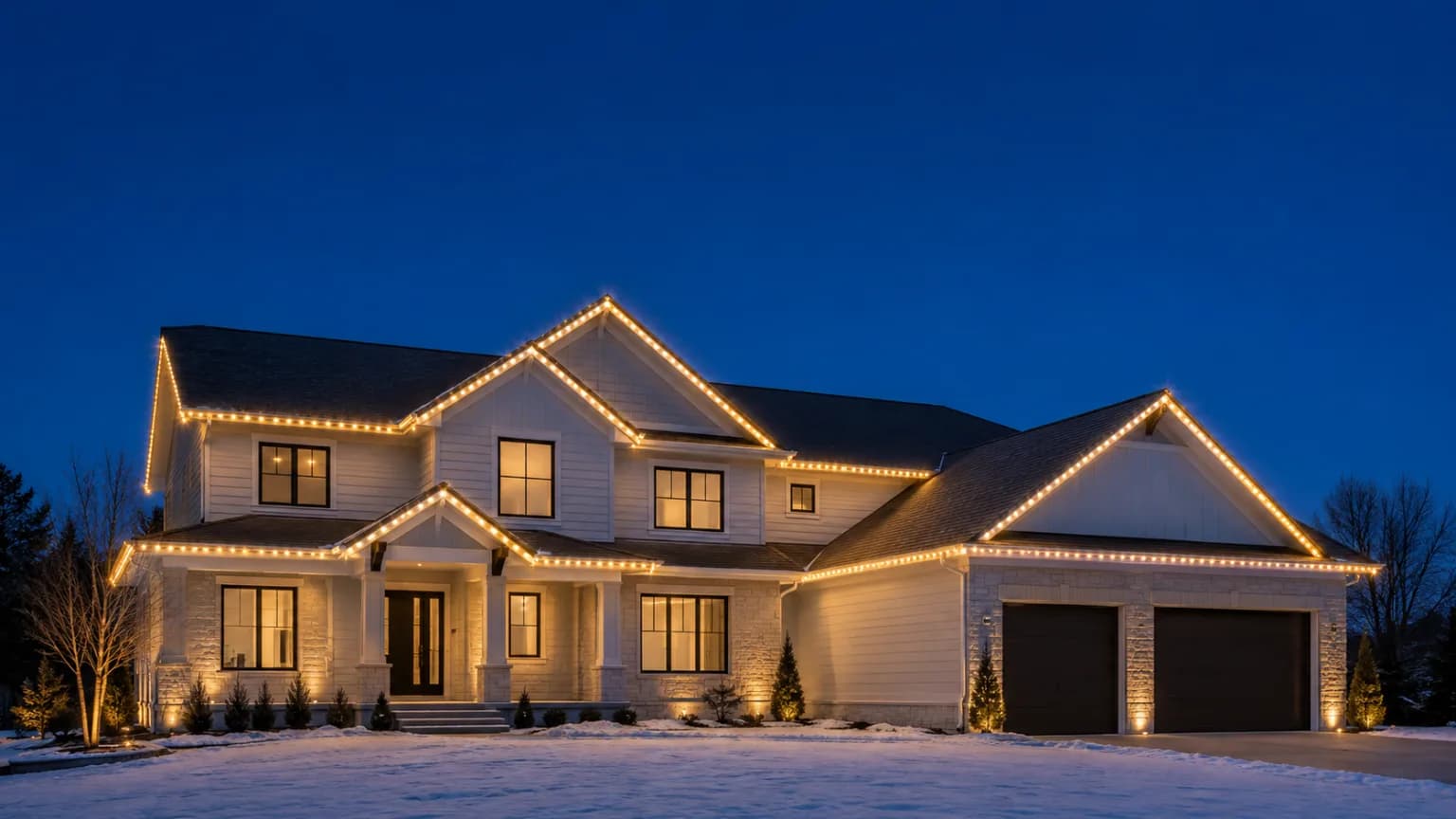
On published rates, Trimlight is the cheapest of the three: its pricing page gives a range of "$18-$35 per linear foot," and $18 is the lowest figure any of these brands puts in writing. JellyFish publishes "$25 to $35 per linear foot installed," with most homeowners spending $3,000 to $6,000 on the street-facing sides and an average around $4,600. Gemstone Lights publishes no number at all — not on its own cost page, not in its FAQ — so a Gemstone quote is the one you cannot check against a manufacturer figure before you take the appointment.
Quick picks from this guide
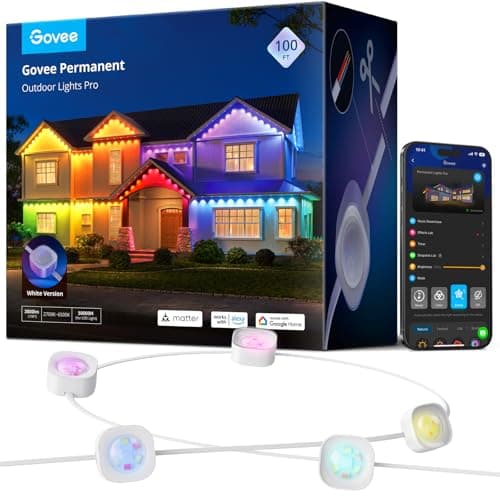
Govee Permanent Outdoor Lights Pro, 100ft
The closest thing here to the installed look, with a white range that overlaps what JellyFish publishes.
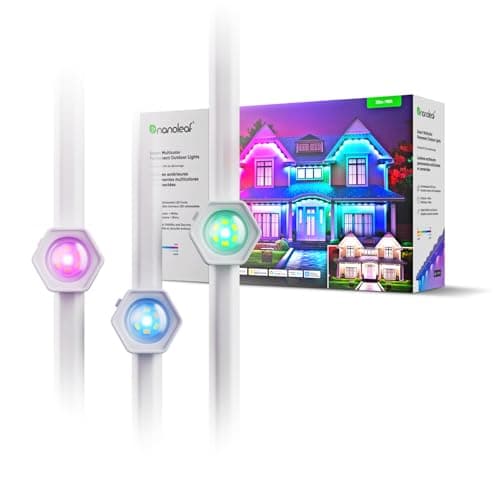
Nanoleaf Matter Permanent Outdoor Lights, 98ft
The one to buy in an Apple household — Nanoleaf lists HomeKit support alongside Alexa and Google Assistant.
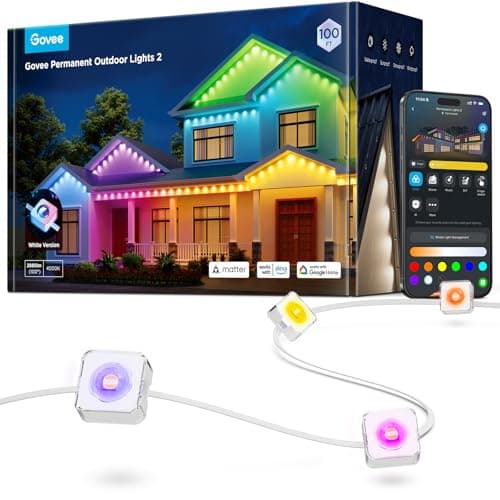
Govee Permanent Outdoor Lights 2, 100ft
Comfortably the cheapest of the three plug-in kits here and the value pick in this group — $160 under the Pro on 17 August 2026, and cheape…
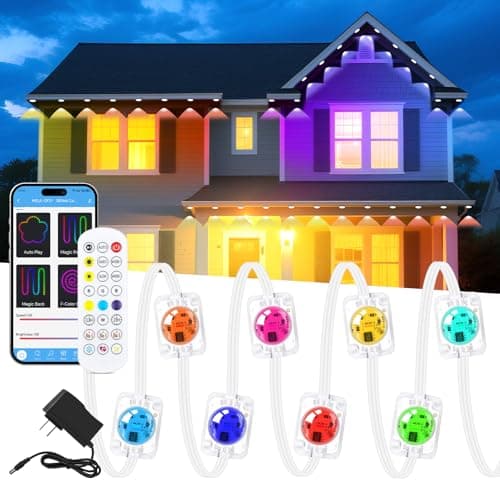
KISUFU 200FT RGB+IC
The price is the story: this is less than 2% of an average JellyFish installation for twice the footage.
| Published per-foot rate | Published typical total | DIY allowed? | Warranty headline | |
|---|---|---|---|---|
| **Trimlight** | $18-$35 per linear foot | $2,000-$6,000 or more | Yes, but it voids the lifetime warranty | Lifetime product warranty, tiered by product line |
| **JellyFish** | $25-$35 per linear foot installed | $3,000-$6,000, average around $4,600 | Yes — sells DIY kits directly | 5 years parts, 1 year labor |
| **Gemstone** | Not published | Not published | No, on both product lines | Lifetime on bulbs, 10 years on parts, 1 year labor |
Gemstone's silence on price is not an oversight, and it is the most useful thing to know before you start calling installers. The company has a page titled around what its lights cost, and a second FAQ entry on the same question. Neither one names a figure, and both route you to a local dealer.
This guide is about the money: what each brand publishes, what the number includes, where the quote grows, and how the warranties differ in ways the price does not show. It covers the three brands the rest of this site has not written about. EverLights, which sells direct to homeowners, is covered in our permanent light installation cost guide and appears here only for comparison.
If you would rather skip installers entirely, jump to the plug-in route just below. Those systems cost a tenth of an installed quote and you can order one today.
The Numbers, Side by Side
Every figure in this table is published by the brand itself, on the page named in the last column. Nothing here is an estimate.
For outside context: the cost-data site Fixr puts year-round permanent displays at "an average of $3,000 to $3,500," on a page last updated in January 2025. That sits just under the middle of both published ranges above, which is a reasonable sanity check on the brands' own numbers.
The Plug-In Route: What You Can Buy and Install Yourself
The JellyFish, Trimlight and Gemstone sections below describe systems that a crew mounts to your roofline for a four-figure sum. There is a second category entirely: smart permanent-style light strips you install with adhesive and clips, plug into an outlet, and control from an app.
They are not the same product. The track is not custom, the finish is not color-matched to your fascia, and no one is coming out to service it.
They are also roughly a tenth of the price, and they arrive this week. For a lot of houses that is the correct trade. Our full permanent outdoor Christmas lights roundup is the place to compare the whole category; these four are the ones most relevant to somebody weighing three installer price lists. Prices below were verified on 2026-08-16.
Govee Permanent Outdoor Lights Pro, 100ft — the closest thing to the installed look
Price: $439.99 Check price

The closest thing here to the installed look, with a white range that overlaps what JellyFish publishes.
Govee lists an anti-glare lens producing a triangular lighting effect, 75 scene modes, and 16 million colors, with white output between 2700K and 6500K at up to 50 lumens per light. The lights and adapter are IP67 rated with an IP65 control box, rated for 50,000 hours and temperatures from -4°F to 140°F.
Two practical notes from the listing:
- Installation uses supplied VHB glue and clips, spliced through waterproof joints every 16.4 feet, mounted 2 to 4 inches from the wall.
- Extension limit: the run "cannot be directly extended past 150ft without a Govee driver module" — the same kind of segment ceiling the installed systems have, at a much smaller scale.
Sold by Govee US, new, in stock.
Nanoleaf Matter Permanent Outdoor Lights, 98ft — for an Apple household
Price: $349.99 Check price
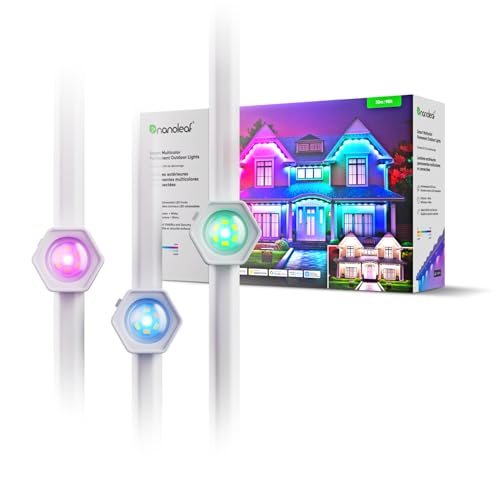
The one to buy in an Apple household — Nanoleaf lists HomeKit support alongside Alexa and Google Assistant.
Sixty addressable pucks, each containing three warm white LEDs, three cool white LEDs and an RGB LED at 50 lumens, with a 2200-6500K white range. The listing notes that Matter requires iOS/tvOS 16.5+ or Android 8.1+ plus a compatible hub, on 2.4GHz Wi-Fi.
Three practical notes:
- It is trimmable and extendable to 147 feet on one controller, and ships as modular 16-foot strings.
- The listing specifies that "included screws are required for reinforcement and permanent mounting" — worth reading before you assume this is an adhesive-only job.
- It is rated IP67 and IP65, UV resistant, and ships with wire covers rather than leaving you to hide the cable.
Sold by Nanoleaf USA, new, in stock.
Govee Permanent Outdoor Lights 2, 100ft — the value pick
Price: $279.99 Check price
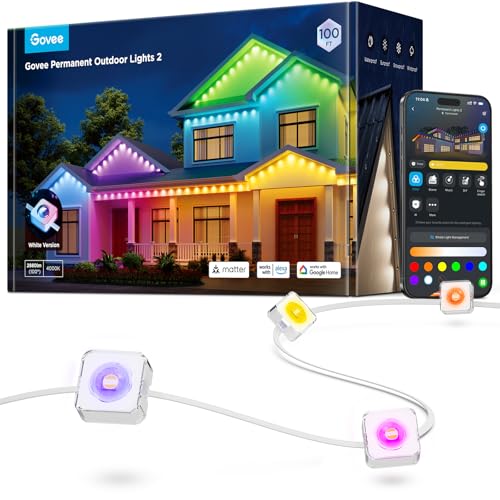
Comfortably the cheapest of the three plug-in kits here and the value pick in this group — $160 under the Pro on 17 August 2026, and cheaper than it in every pricing we have checked.
It carries 100 scene modes, 16 million colors, IP67 lights and an IP65 control box and adapter, app control with timers and away-from-home switching, plus Alexa and Google Assistant. Installation uses VHB glue, clips, screws and adapter buckles.
The listing carries one hard limitation and one compatibility warning, and both matter before you buy:
- No cutting. These "cannot be cut" — unlike the Pro, there is no trimming to fit — with a maximum of 9 light segments and 4 extension cables.
- Do not mix generations. Govee explicitly warns against mixing the original Permanent Outdoor Lights (H705A/B/C) with the Permanent Outdoor Lights 2 (H705D/E/F) or the Elite. If you already own Govee permanent lights, check your model number first.
Sold by Govee US, new, in stock.
KISUFU 200FT RGB+IC — the cheapest way to try the idea
Price: $48.00 Check price

The price is the story: this is less than 2% of an average JellyFish installation for twice the footage.
Two hundred feet of strip, and the published specs:
- 221 lighting modes and 16 million colors on RGB+WS2811+IC, running at 24V.
- Rated IP68 and UV resistant from -4°F to 140°F, with a stated 50,000-hour lifespan.
- App and included remote control, VHB adhesive and clips.
- Expandable to 450 feet with tail connectors.
It is also an unfamiliar brand, and the listing is sold by a third-party seller, Immortality980, rather than by Amazon or by KISUFU itself — a different risk profile from the Govee and Nanoleaf listings above, and the reason it sits last here rather than first. New, in stock.
For more of the budget tier, see our budget permanent outdoor lights guide.
Trimlight: the lowest published entry, and one expensive footnote
Trimlight's pricing page states that "permanent holiday lighting costs range from $18-$35 per linear foot," and its 2026 pricing guide repeats the same range. On totals, the same guide says "most residential Trimlight installations fall somewhere in the range of $2,000 to $6,000 or more."
Trimlight is also the only one of the three that publishes a cost table by house size. It gives three tiers, each split between the front of the house and all sides:
| House size | Front only | All sides |
|---|---|---|
| Small | $2,500 - $3,500 | $5,400 - $9,000 |
| Medium | $3,400 - $5,200 | $6,500 - $12,000 |
| Larger | $4,400 - $6,800 | $7,500 - $14,500 |
Two things in that table are worth sitting with. The first is the jump from front-only to all-sides: it roughly doubles, every time, at every size. Most homeowners light the street-facing side and stop, and this table shows exactly what the other three sides cost.
The second is that the top tier runs to $14,500, which is well past the "$2,000 to $6,000 or more" headline. The words "or more" are doing a great deal of work.
Where the price is actually set. Trimlight says plainly that "linear foot pricing and installation costs are determined by your local, authorized dealer." The national range is guidance, not a price list. Your quote comes from a franchise with its own labor costs and its own calendar.
The footnote that costs money. Trimlight's lifetime product warranty is its headline feature, and its FAQ contains the single most important sentence in this entire comparison: "While a selection of Trimlight dealers might provide DIY kits, it's important to note that choosing this path will nullify your lifetime product warranty."
So the DIY saving is real and so is the cost of taking it. If the lifetime warranty is the reason you chose Trimlight over a cheaper system, installing it yourself removes the reason.
What "lifetime" means here. Read the warranty page and the word narrows. The guarantee is that "all parts are guaranteed for the manufacturers estimated lifespan of the parts" — lifetime of the part, not of the house or the owner.
It also tiers down by product:
- Landscape lights — a 10-year product warranty
- The globe light lens — covered for 2 years
- Ridge lights — a 1-year warranty
Labour on defective parts is covered "for a minimum of 1 full year."
The physical difference. Trimlight's channel is "1.3" depth and 1.85" high" and sits beneath the soffit, and the company says its "classic and 3L bulbs protrude out of the channel for better visibility from most angles at night and provides a more traditional holiday look."
That is a genuine style fork rather than marketing: a protruding bulb reads as a string of lights, and a recessed one reads as a glowing line. Neither is better. Decide which one you actually want on your house before you compare quotes, because it is not a thing you change later.
JellyFish: the most complete published picture
JellyFish publishes the fullest cost breakdown of the three. Its pages do carry a date stamp — "Published Aug 14, 2026" — but do not read that as a freshness signal: the identical string, to the minute, is served on the homepage and on 404 pages for URLs that do not exist.
It is the site builder's deploy timestamp, not a publication date, and at least one JellyFish page it stamps still carries superseded warranty copy. The figures below are quoted because the company publishes them, not because a stamp says they are new.
The per-foot rate: "costs per foot range from $25 to $35 per linear foot installed, depending on complexity, region, and time of year amongst other factors." Note "time of year" sitting in that list. Installers are quieter in spring than in October, and the company is telling you the rate moves with its calendar.
The total: "most homeowners spend between $3,000 and $6,000 for a JellyFish Lighting system installed on the street-facing sides of their home. The average cost is around $4,600." That average is more useful than either range on this page, because it is a real central figure rather than a span wide enough to contain almost any quote.
The controller is a separate line item, and it is not small. JellyFish states that controllers "range from $650-$850. One controller can power 263 feet of lights, and additional power supplies can provide additional sets of 263 feet up until a maximum of 2,400 feet of lighting (3,200 LED lights)."
This is the detail that catches people out when comparing quotes. Controller cost is a step function, not a per-foot cost. A house needing 260 feet pays for one controller; a house needing 270 feet pays for a second power supply. If your run lands near a 263-foot boundary, asking the estimator to shave a few feet somewhere can be worth several hundred dollars.
Whose price is it. The pricing page is explicit that its figures describe "the approximate price of installation by Corporate Locations. Authorized Dealers operate independently and their pricing varies." Same structure as Trimlight: the published number is corporate, the quote is local.
Warranty. JellyFish covers parts for five years and labor for one. Its FAQ states it flatly — "we offer a warranty of 1 year covering labor and 5 years covering parts" — and the product page repeats it as a spec: "Parts 5 years / Labor 1 year."
That is the shortest headline in this comparison, and also the least ambiguous: five years means five years, with no product-line tiers to read.
One caveat for anyone checking our work: a single JellyFish page, its holiday-lighting solutions page, still says "three years on parts." It is an un-updated sibling of two identical pages that say five, and the FAQ and product page govern.
DIY. JellyFish is the only one of the three actively selling DIY kits to homeowners. Its DIY page takes orders directly, asking for the footage you need, controller placement, track type, color and wire placement.
Its own blog puts it plainly: "for those who are handy, a DIY installation might be tempting, and it is very doable; for that reason the option is offered." It does not publish a DIY price anywhere, so that route still requires a conversation.
The hardware. The system runs at 48 volts, is UL listed, and the company says the design lets it "easily achieve a true IP67 rating," with white control from 2700K to 5000K.
The track is "a small color-matched track that can be installed on any eave type in your direction of choice," and the bulb is a "puck shape and frosted lens designed for smooth light distribution" — the recessed, diffuse look, in contrast to Trimlight's deliberately protruding bulb.
Gemstone: no published price, and no DIY at all
Gemstone Lights is the outlier, in a way that matters more than any per-foot figure.
Ask the company what its system costs and you get a method, not a number. Its FAQ: "the cost of Gemstone Lights Track Lighting is determined by two factors: the number of linear feet needed and the local market rate for installation," followed by an invitation to "contact your local Authorized Dealer who can provide you with a personalized price based on your specific needs and local market rate."
Its dedicated cost article says the same thing in different words — multiply the local market rate by your linear feet — and names no dollar figure anywhere on the page.
The only Gemstone price this guide could verify comes from a single authorized dealer serving Utah and Nevada, which advertises "we charge only $22.50 a foot!" and adds that "for an average home with roughly 150 feet of roofline, that's typically $3,375." Treat that as one dealer in one market on an undated page, not as a Gemstone price. It is a data point, not a rate card.
There is no DIY option, and Gemstone says so twice. Its FAQ states "no, we do not offer a DIY solution for the Gemstone Lights Track Lighting System" and, separately, "no, we do not offer a DIY option for the Gemstone Lights Flood Light System." If you were hoping to buy the hardware and mount it over a weekend, this brand is not available to you at any price.
The warranty is the strongest on paper and the easiest to lose. Gemstone covers the bulbs for life — "the industry-leading lifetime warranty applies to the specific bulbs/lights used in both Commercial and Residential Track Lighting systems" — with 10 years on "power kits, controllers, cables, connectors, and tracks," and confirms "we provide a one-year labor warranty, covering any service charges within that period."
Then comes the condition: "warranty registration must be completed within 30 days of installation for it to be valid." Thirty days, or the whole thing lapses. It also transfers to a buyer if "the transfer is completed within 90 days of home possession," carrying the remaining coverage up to a two-year cap.
Put a reminder in your calendar on installation day. This is the only warranty in the comparison with a hard cliff attached to it, and missing it converts the best coverage of the three into none.
Gemstone's Hardware, and Two Different Lifespan Numbers
The hardware justifies some of the mystery. Gemstone's track is machined per job: "Gemstone Lights uses our in-house machines to custom fit any shape or depth of track," with access to "over 150 soffit and fascia colors, allowing us to create an exact color-match."
Note how it goes on: the track "is fastened permanently to the soffit by sliding one side of the track under the L-trim of the fascia and inserting a color-matched screw into the other side." That is a screwed, permanent fixture, not a clip-on — worth knowing before you commit a roofline to it.
Each light carries "3 LED bulbs which house 4 diodes each" in an RGBWW arrangement, rated IP67, "capable of producing 16 million colors." The company also confirms "there are no monthly fees for using the Gemstone Lights app."
On lifespan, Gemstone publishes two different answers. Its residential track-lighting page rates the system at a "life expectancy of 50,000 hours. With average usage being 6 hours a day, the system is rated to last around 23 years!" Its FAQ and its warranty page run the same 50,000 hours at a different duty cycle: "When used 7 hours per day this equates to 20 years." Same hardware, same hour count, two published conclusions three years apart.
The warranty page is the one that governs coverage, so 20 years is the figure to plan against — and either way the number is an LED rating, not a promise about the controller, cabling or connectors, which carry ten years rather than a lifetime.
A custom-machined, color-matched aluminum track is a genuinely different product from a universal channel, and custom work is hard to price on a web page. That explains the silence. It does not remove the disadvantage of walking into a quote with no published number to check it against.
Where EverLights sits
EverLights is the useful fourth corner, because it sells finished DIY kits directly at posted prices — the one brand here where you can read a number without booking an appointment.
Its store (myeverlights.com) lists two bundles:
- ClickLights 150′ Bundle — a regular $2,300.00, currently discounted to $1,840.00
- ClickLights 200′ Bundle — a regular $2,925.00, currently $2,340.00
The company describes a system "designed specifically for DIY installation," with most homeowners completing the project "in a weekend using standard household tools" and no special tools beyond "a ladder, screwdriver, and measuring tape."
Compare that against the installed rates above and the shape of the market becomes clear — and it points the opposite way to the usual assumption about premium DIY. At Trimlight's published $18 per foot, 150 feet of professional installation lands near $2,700. The same 150 feet of EverLights hardware is $1,840 on today's sale and $2,300 at the regular price.
So DIY from a premium brand undercuts even the cheapest published installed rate — by roughly $860 on sale, and still by about $400 at full price. Against the top of Trimlight's own $35-per-foot range, where 150 feet runs about $5,250, it is not close at all.
Read per foot, EverLights lands near $12.30 on sale and $15.30 regular for the 150′ bundle, against $18 to $35 installed.
What you are buying with the higher installed number is the labor, the ladder work and someone else's warranty on the install — which is a real thing to buy, especially two stories up. But the money question has a clear answer: the hardware is the cheaper half, and doing it yourself keeps that difference.
Two cautions on those figures. The discount is dated — the store's own sale block expires 30 September 2026, after which the regular column applies — so check before you plan around it. And the installation cost guide now carries the same EverLights bundle list prices, read on Sept 1, 2026, alongside the Amazon DIY kits — useful if you want the two sets of numbers side by side.
How to Read a Quote Without Getting Beaten
A few things fall out of the published numbers that are worth carrying into an actual estimate.
Ask for the per-foot rate and the footage separately. Both are negotiable in different ways, and a single total conceals which one is high. If a quote works out well above the brand's own published range, that is a fair question to ask out loud.
Get the controller broken out. JellyFish publishes $650-$850 for the controller and a 263-foot ceiling per unit. Any brand's quote should tell you how many controllers or power supplies it includes, because that is where a modest footage increase produces a large price jump.
Confirm which sides are in the number. Trimlight's own table shows all-sides work at roughly double the front-only price, at every house size. A quote that sounds high may simply be quoting more of the house than the one you compared it to.
Ask when they can start. JellyFish names time of year as a factor in its own rate. An August or September install is being sold in a quieter month than a November one.
Register the warranty immediately if you buy Gemstone. Thirty days, and it is the only clock of its kind here.
Decide the bulb style before you compare. Protruding bulbs (Trimlight's stated design) and recessed frosted pucks (JellyFish's) produce genuinely different looks. Comparing quotes across that difference is comparing two products.
One caution on brand comparison pages generally: Trimlight publishes its own side-by-side against JellyFish, claiming "over 50 channel color options" and "180 preset patterns" for itself against "21 channel color options" and "102 preset patterns" for JellyFish. Those are one competitor's numbers about another, published to sell a system. Treat them accordingly.
Bottom Line
On price alone, call Trimlight first: $18 per linear foot is the lowest published figure of the three, and its cost table by house size is the only breakdown of its kind here — a quote you can check before an estimator is standing in your driveway.
If clear terms matter more than the lowest entry, call JellyFish — $25 to $35 installed, an average around $4,600, five years on parts, and DIY kits sold directly.
Skip the installed route altogether if what you actually want is never climbing a ladder in December again. A plug-in system delivers exactly that for a tenth of the money, from the $439.99 Govee Pro down to the $48.00 KISUFU.
And if you want the custom track but not the crew, note what EverLights' own posted prices show: 150 feet of premium DIY hardware at $1,840 on sale undercuts even the cheapest published installed rate.
Last updated: August 2026. Brand pricing, warranty terms and product availability were verified on 2026-08-16 against each company's own published pages, and the Amazon kit prices were re-checked on 2026-08-17 and change on their own schedule — confirm current details with the manufacturer or dealer, and through the links above, before buying.
Frequently Asked Questions
Which is cheapest: Jellyfish, Trimlight or Gemstone?
On published rates, Trimlight — its pricing page gives "$18-$35 per linear foot," and $18 is the lowest figure any of the three publishes. JellyFish publishes "$25 to $35 per linear foot installed." Gemstone publishes no rate at all, so it cannot be ranked on published pricing. All three set the final number through a local dealer, so a specific quote can land anywhere inside or outside these ranges.
How much do permanent Christmas lights cost for a whole house?
JellyFish says most homeowners spend $3,000 to $6,000 for the street-facing sides, averaging around $4,600. Trimlight says most residential installations run $2,000 to $6,000 or more, and its own table puts all-sides jobs between $5,400 and $14,500 depending on house size. The independent cost site Fixr puts permanent displays at an average of $3,000 to $3,500. Front-facing only is roughly half of an all-sides job in Trimlight's published table.
Why won't Gemstone Lights tell me the price?
Its FAQ says cost is set by "the number of linear feet needed and the local market rate for installation" and directs you to an authorized dealer for a personalized quote. Its own cost article also names no figure. The likeliest practical reason is that Gemstone machines its track to fit each roofline and color-matches it from over 150 soffit and fascia colors, which is difficult to price generically. One authorized dealer in Utah and Nevada advertises $22.50 per foot, or about $3,375 for a 150-foot roofline — one dealer in one market, not a national rate.
Can I install permanent Christmas lights myself?
It depends entirely on the brand. JellyFish sells DIY kits directly and says the installation "is very doable." Trimlight allows it through some dealers but states that choosing DIY "will nullify your lifetime product warranty." Gemstone offers no DIY option on either its track lighting or its flood light system. EverLights sells DIY kits at posted prices and says most homeowners finish in a weekend with standard household tools.
Whose warranty is actually best?
They are not directly comparable. Gemstone covers bulbs for life, other parts for 10 years and labor for 1 year — but registration must be completed within 30 days of installation or the coverage is void. Trimlight's lifetime warranty guarantees parts "for the manufacturers estimated lifespan of the parts," and tiers down to 10 years on landscape lights, 2 years on the globe lens and 1 year on ridge lights, with at least 1 year of labor. JellyFish is the simplest: 5 years parts, 1 year labor. Read the tiers and conditions before ranking the headlines.
Is a plug-in smart light strip the same thing as an installed system?
No, and it is worth being clear about the difference. Installed systems use custom or color-matched track fastened into your roofline, come with a service relationship and a multi-year warranty, and are fitted by a crew. Plug-in strips mount with adhesive and clips, plug into an outlet, and are yours to maintain. What they share is the year-round permanence and the app control. If the appeal of permanent lighting is "never climbing a ladder in December again," a plug-in system delivers that for a few hundred dollars. If the appeal is a finish indistinguishable from the fascia, it does not.
Does the time of year change the price?
JellyFish names time of year as one of the factors in its per-foot range, alongside complexity and region. Installers are busiest in autumn ahead of the holiday season. A quote requested in late summer is being priced in a quieter month than one requested in November.
Get our Christmas gear picks
Holiday deal roundups and updates when our top picks change.
No spam, ever. Unsubscribe anytime.
Sources & Methodology
Methodology: ChristmasGearHQ guides are researched on an expert-verification model. Specifications, dimensions and capability claims are taken from the manufacturer's own published material and, where available, independent published reviews, and are attributed in the text to the source that published them. Where two sources disagree, we say so and name both rather than picking one. We do not make first-person hands-on testing claims.
Prices, sellers and availability are read from the live product page and move on their own schedule — confirm the current figure through the links above before buying. Edited by Nicholas Miles, Chief Editor. Corrections: contact us.
More Guides
- Christmas LightsBest Giant Lighted Outdoor Christmas Trees 2026: 6 to 20 Foot Cone, Flagpole, Spiral and 3D Picks
- Christmas LightsBest Smart Outdoor Plugs & Timer Zone Kits for Christmas Lights 2026
- Christmas LightsChristmas Light Power, Mounting & Cable Accessories 2026
- Christmas LightsPermanent Christmas Lights for Halloween & Year-Round Use 2026