How to Choose an Artificial Christmas Tree — Size & Type Guide 2026
How to choose the right artificial Christmas tree in 2026 — sizing for your ceiling, full vs slim vs flocked, pre-lit vs unlit, and the quality signals that separate a great tree from a cheap one.
This article contains affiliate links. If you purchase through these links, we may earn a commission at no extra cost to you. Learn more.
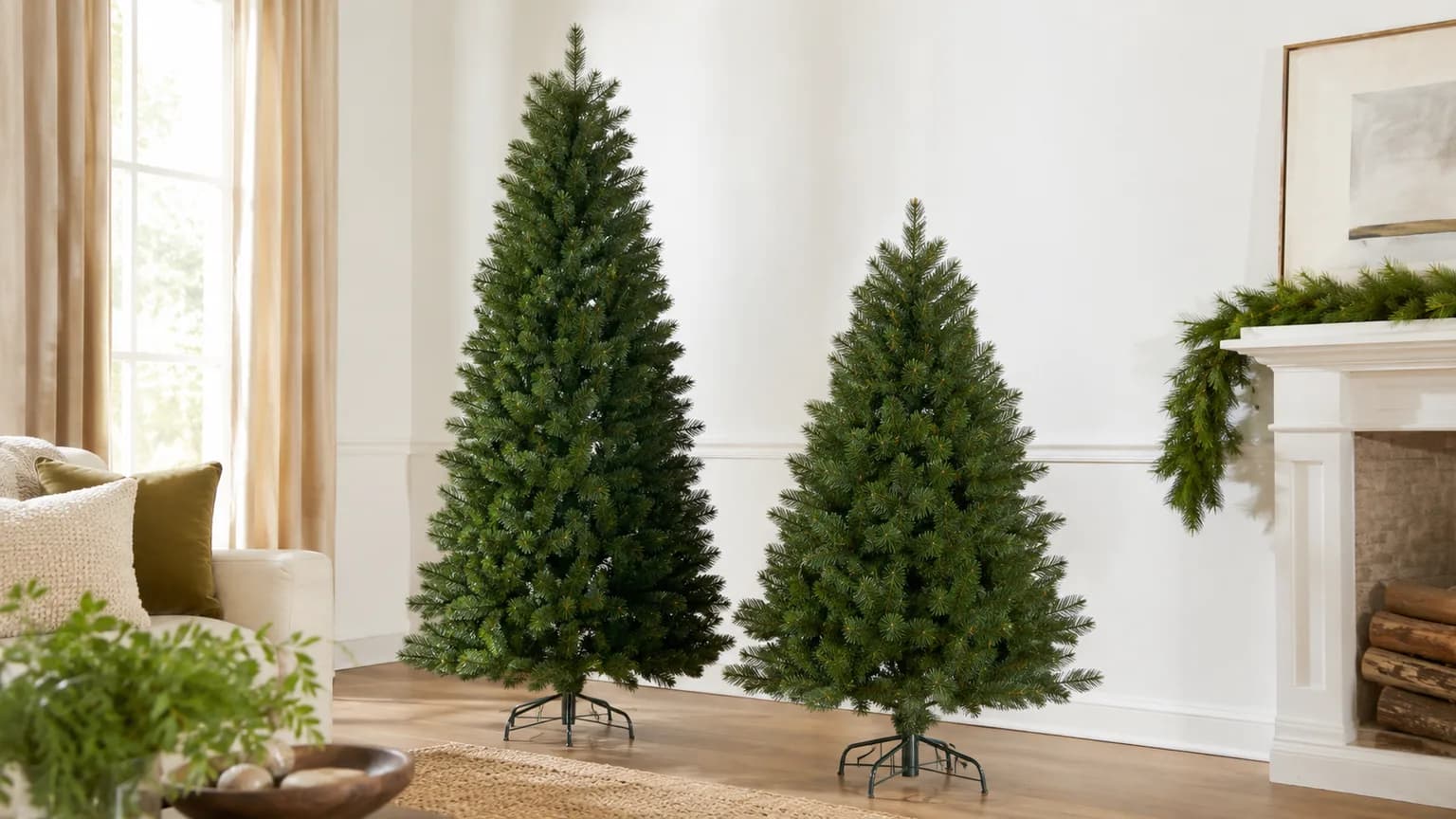
An artificial Christmas tree is one of the few holiday purchases a household lives with for a decade or more, and the two decisions that matter most — how big it is and what body type it has — get made before anything is added to a cart. Get the size right and the tree fills the room without crowding it; get the type right and it suits the space, the storage closet, and the look the household is after. Get either wrong and the tree either scrapes the ceiling, swallows the walkway, or looks sparse no matter how many ornaments go on it.
The trouble is that most shoppers reverse the order. They fall for a photo, buy the tree, and only then discover the topper won't clear an 8-foot ceiling or that a "full" profile eats two feet of floor in a small living room. The fix is to decide the size and type first — measure the room, pick the profile, settle the pre-lit question — and treat the actual product choice as the last step, not the first.
There's also a timing advantage to deciding now. Artificial-tree selection is widest in late summer and early fall, well before the November rush thins out popular heights and flocked models. Shoppers who settle their sizing and type early get first pick of the full range at regular prices, rather than scrambling in December for whatever height is left in stock. The decisions below cost nothing to make in July and save a lot of frustration later.
Sizing: Height and Ceiling Clearance
The single most common sizing mistake is buying a tree the same height as the ceiling. A tree needs headroom above its top branch for a topper — a star or angel typically adds 6 to 12 inches — and it sits on a stand that lifts the base a few inches off the floor. The general rule is to leave roughly 6 to 12 inches of clearance between the top of the tree and the ceiling, then add the topper into that gap.
Start by measuring the actual ceiling height in the room where the tree will stand, floor to ceiling, since older homes and finished basements often run lower than the standard 8 feet. For a standard 8-foot ceiling, a 7 to 7.5-foot tree is the safe, popular choice: it reads as a full-size tree while leaving room for a topper without brushing the ceiling. For a 9-foot ceiling, a 7.5-foot tree still looks proportional, and an 8-foot tree works if a taller, more dramatic look is the goal.
A 9-foot tree is a different animal. It belongs in rooms with high, vaulted, or two-story ceilings — think a great room, a foyer with a staircase, or a cathedral-ceiling living room. In a standard 8-foot room a 9-foot tree simply won't fit once the stand and topper are accounted for. When in doubt, size down rather than up: a slightly shorter tree with proper clearance always looks more finished than a too-tall tree jammed against the ceiling with no room for a topper.
Sizing: Width and Footprint
Height gets all the attention, but width is what determines whether a tree fits the room in practice. Every tree has a base diameter — the width of the bottom row of branches when fully fluffed — and that number decides how much floor it claims and whether it blocks a walkway, a doorway, or a piece of furniture. A full-profile 7.5-foot tree often spans roughly four to five feet across at the base, while a slim or pencil tree of the same height might be half that.
Before choosing a profile, measure the footprint the room can spare. Note the distance from the wall or corner to the nearest traffic path, and remember the tree needs a few inches of breathing room so branches aren't crushed against a wall. In an open family room with floor to give, a full profile looks lush and generous. In an apartment, a narrow entryway, a bay window, or a room where the tree has to tuck into a corner, a slimmer profile is the difference between a tree that fits and one that's constantly in the way.
Corners deserve special attention. A full tree pushed into a corner wastes much of its width against two walls, so a slim or pencil profile often looks better and wastes less space there. The goal is a tree whose diameter matches the floor the room can actually give up — not the widest tree that will technically squeeze in.
Full vs Slim vs Pencil vs Flocked
Body type is the other half of the decision, and there are four profiles worth knowing.
Full trees have the widest base and the densest branch spread — the classic, lush Christmas-tree silhouette. They suit open rooms with floor to spare and households that hang a lot of ornaments, since there's ample branch surface. They need the most storage space and the most floor.
Slim trees keep a natural triangular shape but with a noticeably narrower base than a full tree of the same height. They're the sensible middle ground for medium rooms, tighter living areas, or anyone who wants a traditional look without surrendering five feet of floor.
Pencil trees are the narrowest profile — tall and columnar, sometimes only 20 to 30 inches wide at the base. They're built for small spaces: apartments, entryways, offices, narrow corners, or flanking a front door in pairs. They hold fewer ornaments but fit where nothing else will.
Flocked trees describe a finish rather than a shape — branches coated in a white, snow-like material to mimic a fresh snowfall. A flocked tree can come in any profile, and it creates a striking, wintry, farmhouse-style look. The trade-offs: flocking can shed a little, it shows off fewer ornaments (the snowy branches are part of the look), and it pairs best with simpler, monochrome or metallic decor rather than a busy ornament collection.
Pre-Lit vs Unlit
The pre-lit versus unlit question comes down to convenience versus control. A pre-lit tree arrives with lights already integrated into the branches, wired and evenly distributed at the factory. That saves the single most tedious part of tree setup — stringing lights — and guarantees even coverage from trunk to tip with no bare patches or tangled strands. For most households, pre-lit is the path of least resistance, and it's why the majority of popular trees ship that way.
The case for unlit is control and repairability. An unlit tree lets the decorator choose exactly how many lights, what color, and what placement, and if a bulb or strand fails there's no built-in wiring to troubleshoot — you simply restring. The downside is the labor: stringing a 7.5-foot tree evenly takes time and patience every single season.
If going pre-lit, the light technology matters. LED lights have largely replaced incandescent on modern trees, and for good reason: they draw far less energy, run cool to the touch, and last many times longer, so a pre-lit LED tree can go years without a failed bulb. Incandescent lights cast a warmer, slightly softer glow that some traditionalists prefer, but they burn hotter, use more power, and fail sooner. On color, warm white LEDs mimic the cozy amber tone of classic incandescent bulbs and suit a traditional look, while multicolor sets read more playful and nostalgic. Some pre-lit trees offer both modes on a single strand with a switch or remote — worth looking for if the household can't agree on one.
Judging Quality
Two trees at the same height and price can be built very differently, and a few construction details separate a tree that looks full and lasts a decade from one that disappoints by its second season.
Branch construction is the first tell. Better trees use hinged branches that fold down attached to the center pole, so setup is a matter of unfolding and fluffing. Cheaper trees use hook-in construction, where each branch is a separate piece inserted into the pole by hand — slower to assemble, easier to lose pieces, and generally a sign of a lower tier.
Tip count and density determine how full the tree looks. "Tips" refers to the number of individual branch ends; a higher tip count at a given height means a denser, more realistic tree with fewer gaps showing the pole through the branches. It's one of the most useful numbers to compare between models — a tree with a couple thousand tips will look markedly fuller than a sparse one of the same height.
Needle material affects realism. Many trees use PVC needles, which are cut from flat sheets and give a fine, bushy look at a lower cost. Higher-end trees add PE (polyethylene) tips, which are molded from real branches for a three-dimensional, true-to-life appearance, often concentrated on the outer, most visible branches. A mix of PE tips over a PVC base is common on quality trees.
Finally, check the base and stand and the warranty. A sturdy metal folding stand with wide feet keeps a full tree from tipping, and a longer warranty — several years on the frame, often a shorter term on pre-lit lights — signals a manufacturer's confidence in the build.
Match a Tree to Your Situation
With the decisions made, here's how the profiles map to real situations, using a few current examples.
High or vaulted ceiling, want a statement tree. A great room or two-story foyer can carry a 9-foot tree that would overwhelm a normal room. The Best Choice Products 9ft Pre-Lit Spruce ($269.99) is the tallest option here and is built for exactly those high-clearance spaces — confirm the ceiling truly clears 9 feet plus topper room first.
Small space, apartment, or a narrow corner. When floor is tight, a pencil profile fits where a full tree can't. The Puleo International 7.5ft Pre-Lit Fraser Fir Pencil ($163.99, read September 1, 2026) keeps full height in a columnar pencil silhouette — good for entryways or flanking a doorway in pairs, though check the floor first: Puleo publishes a 30-inch base, wider than either "slim" Kingswood Fir. Note its 350 lights are traditional incandescent rather than LED, so it runs a touch warmer and uses more power than an LED pre-lit tree.
Want a wintry, snow-dusted look. For farmhouse or monochrome decor, a flocked finish does the heavy lifting. The 7.5FT Pre-lit Snow Flocked Spruce with remote ($179.99) brings the snowy branches and includes remote light control — pair it with simple metallic or single-color ornaments.
Standard 8-foot ceiling, classic full look. For the traditional lush tree in a normal living room, a 7 to 7.5-foot full pre-lit is the default. The National Tree Company 7 ft Pre-Lit Dunhill Fir ($194.99) fits an 8-foot ceiling with topper room, runs 700 warm white LEDs across 2,144 tips for a dense, well-lit silhouette, and includes a stand.
Whatever the pick, budget for the extras a tree needs: a sturdy tree stand if the model doesn't include one, a tree skirt or collar to hide the base, a tree storage bag to protect it in the off-season, and a tree topper sized to the clearance gap.
For the full lineup with prices and specs, see our best pre-lit artificial Christmas trees guide, or drill into the style and size that fits: the most realistic artificial trees, 9-foot and large trees for high ceilings, flocked snow-dusted trees, slim and pencil trees for small spaces, and unlit trees for your own lighting. And once the tree is chosen, plan the ornaments and palette around it with our Christmas decor theme & color planning guide.
Last updated: July 2026. Prices may vary on Amazon — check current pricing via the links above.
Frequently Asked Questions
What size artificial Christmas tree should I get for an 8-foot ceiling?
A 7 to 7.5-foot tree is the standard, safe choice for an 8-foot ceiling. It reads as a full-size tree while leaving roughly 6 to 12 inches of clearance for a topper and the few inches the stand lifts the base off the floor. Going with a full 8-foot tree in an 8-foot room usually means no room for a topper and branches brushing the ceiling, so most shoppers size down slightly for a cleaner look.
Is a pre-lit or unlit tree better?
It depends on whether convenience or control matters more. Pre-lit trees save the tedious job of stringing lights and guarantee even, factory-set coverage, which is why most popular trees ship that way. Unlit trees let the decorator choose the exact number, color, and placement of lights and make a failed strand easy to replace by simply restringing — at the cost of time and effort every season.
What's the difference between a slim, pencil, and full tree?
The difference is base width at the same height. Full trees have the widest, densest profile and need the most floor space; slim trees are noticeably narrower for a traditional look in a tighter footprint; and pencil trees are the narrowest, tall and columnar, built for apartments, entryways, and corners where floor space is scarce. Height stays the same across all three — only the width and ornament capacity change.
Do flocked trees shed a lot?
Flocked trees can shed a little of their snow-like coating, especially in the first season and when handled during setup and takedown, though quality flocking is applied to hold up well. Because the snowy branches are part of the look, flocked trees also tend to show off fewer ornaments and pair best with simpler, monochrome, or metallic decor rather than a dense, colorful ornament collection.
What does "tip count" mean and why does it matter?
Tip count is the number of individual branch ends on a tree, and it's one of the best indicators of how full the tree will look. A higher tip count at a given height means denser branches and fewer gaps showing the center pole, so a tree with a couple thousand tips looks noticeably lusher than a sparse one of the same height. It's a useful number to compare directly between models at the same price and height.
Are LED or incandescent lights better on a pre-lit tree?
LEDs are the better choice for most households. They draw far less energy, run cool, and last many times longer than incandescent bulbs, so a pre-lit LED tree can go years without a failed light. Incandescent bulbs give a slightly warmer, softer glow some traditionalists prefer, but they run hotter, use more power, and fail sooner. Warm white LEDs closely mimic that classic incandescent tone if the goal is a traditional look.
Get our Christmas gear picks
Holiday deal roundups and updates when our top picks change.
No spam, ever. Unsubscribe anytime.
Sources & Methodology
Methodology: ChristmasGearHQ guides are researched on an expert-verification model. Specifications, dimensions and capability claims are taken from the manufacturer's own published material and, where available, independent published reviews, and are attributed in the text to the source that published them. Where two sources disagree, we say so and name both rather than picking one. We do not make first-person hands-on testing claims.
Prices, sellers and availability are read from the live product page and move on their own schedule — confirm the current figure through the links above before buying. Edited by Nicholas Miles, Chief Editor. Corrections: contact us.
More Guides
- Christmas TreesBest Cat-Proof Christmas Trees 2026: Cat Tree Towers, Tree Fences and Flat-Back Trees
- Christmas TreesBest 11 and 12 Foot Artificial Christmas Trees 2026: Tall Trees for Two-Story Foyers and Cathedral Ceilings
- Christmas TreesBest Pop-Up Christmas Trees 2026: Collapsible Pre-Lit Trees for Fast Setup and Flat Storage
- Christmas TreesBest Twinkling and Color-Changing Pre-Lit Christmas Trees 2026: Dual-Color, Twinkle and Remote Picks