Best Realistic Artificial Christmas Trees 2026
The most realistic artificial Christmas trees for 2026 — dense, lifelike 7.5ft firs and spruces compared on tip count, branch profile, and pre-lit vs unlit, with current prices.
This article contains affiliate links. If you purchase through these links, we may earn a commission at no extra cost to you. Learn more.
Quick picks from this guide
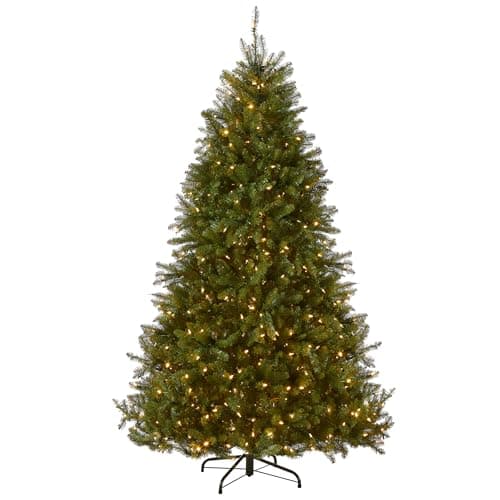
National Tree Company 7.5 ft Pre-Lit Dunhill Fir
$679.99 is the List Price Amazon labels on the listing; at the time of writing the featured offer was $280.00, sold by Amazon.com.
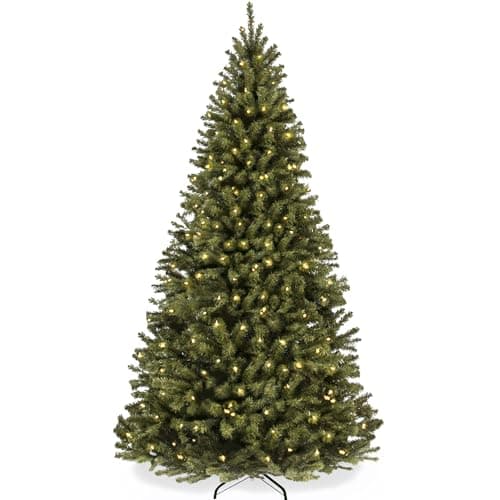
Best Choice Products 7.5ft Premium Pre-Lit Realistic Spruce
If the goal is a lifelike tree while keeping the whole setup under budget, the Best Choice spruce is the one that gets you there.
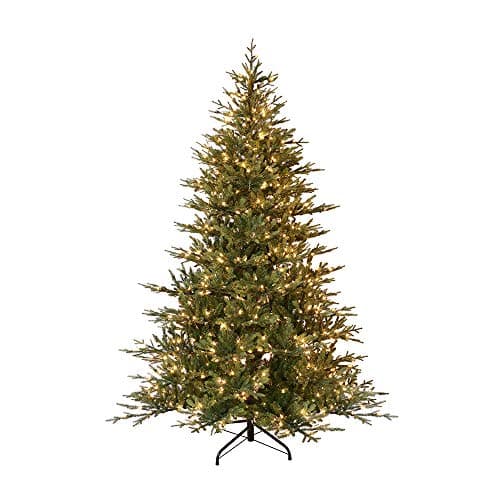
Puleo International 7.5 Foot Pre-Lit Balsam Fir
The Puleo balsam fir is the premium pick, and its differentiator is right in the spec: 800 warm white LED lights, the only tree here that n…
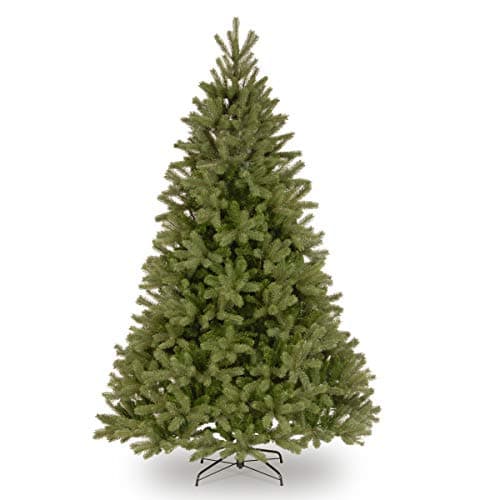
National Tree Company 7.5 ft Unlit Downswept Douglas Fir
For decorators who treat lighting as a personal choice, the unlit Downswept Douglas Fir is the realistic pick that hands you a clean canvas.
| Model | Price | Height | Lights | Tips | Best For |
|---|---|---|---|---|---|
| National Tree Dunhill Fir | $679.99 (checked Oct 4, 2026) | 7.5 ft | 700 LED (pre-lit) | 2,514 | Best Overall |
| Best Choice Premium Spruce | ~$199.99 | 7.5 ft | Pre-lit (count not listed) | Not listed | Best Value |
| Puleo Balsam Fir | ~$357.73 | 7.5 ft | 800 warm white LED | Not listed | Premium / Warm-White Pre-Lit |
| National Tree Downswept Douglas Fir | ~$253.99 | 7.5 ft | Unlit | 1,867 | Best Unlit |
"Realistic" is the single most-searched qualifier shoppers attach to an artificial tree, and it's the one that most cleanly separates a $150 tree from a $350 one. When a full 7.5-foot tree reads as real from the couch, it's rarely one feature doing the work — it's branch tip material, tip count, a natural taper, and enough color variation that the foliage doesn't flatten into a single green blur under the lights.
Here's why July is the smart time to settle this. Premium and lifelike trees are exactly the models that sell through first in the fall, and the most convincing configurations — specific heights, pre-lit warm-white versions, particular fir profiles — are the ones that go out of stock by late October. Buying in the Christmas-in-July window means the realistic tree you actually want is still available at a normal price, and it ships to a garage or closet where it waits, boxed, until you're ready. A tree is also the anchor purchase of a whole setup: a heavy-duty stand, a storage bag that fits a wide-profile tree, a topper, coordinating warm-white lighting, and a first run of ornaments add up fast, so locking in the centerpiece early leaves room to spread the rest out.
This guide compares four 7.5ft trees chosen for how lifelike they look, from a sub-$200 realism-on-a-budget spruce up to an 800-LED warm-white pre-lit balsam fir. Every spec below — light counts, tip counts, lit versus unlit — comes straight from the manufacturer listings, and where a tree doesn't publish a number, this guide says so rather than guessing. If you want the wider field, start with the hub on the best pre-lit artificial Christmas trees, and if you're not yet sure what size or style fits your room, read how to choose an artificial tree size and type first.
Two of these four trees publish a tip count — the Dunhill Fir at 2,514 and the Downswept Douglas Fir at 1,867 — so this guide only compares fullness directly between those two. The Best Choice spruce describes dense branches in its listing but doesn't publish a number, and the Puleo publishes neither a density claim nor a tip count — so both are judged on their own terms, not ranked on density they haven't disclosed.
Our Top Picks
1. National Tree Company 7.5 ft Pre-Lit Dunhill Fir — Best Overall
ASIN: B005CXG1X0 | Price: $679.99 (checked Oct 4, 2026) Check price

$679.99 is the List Price Amazon labels on the listing; at the time of writing the featured offer was $280.00, sold by Amazon.com.
The Dunhill Fir is the pick that lands the most realism cues of any tree here. Its listing publishes 2,514 branch tips — the highest disclosed tip count of any tree here — which is the specification that most directly drives how full and gap-free a tree looks once it's decorated. On a 7.5-foot frame, that tip density is what fills the interior so ornaments sit against foliage rather than floating over a visible pole.
It ships pre-lit with 700 LED lights and 10 light functions, controlled by a foot pedal so you're not crouching behind the tree hunting for a switch. A stand is included, and the Dunhill profile is a classic full triangular fir — the shape most people picture when they picture a Christmas tree.
The trade-off with any pre-lit tree is that the lights are permanent: when a section eventually fails after several seasons, you're repairing or overlaying rather than swapping a plug-in set, and 700 integrated LEDs are a lot to troubleshoot. For most buyers that's years away and worth the convenience of a tree that lights itself in one step. For anyone comparing profiles across the category, its full silhouette contrasts sharply with a slim or pencil tree built for tight corners.
Pros:
- Highest published tip count here at 2,514 — genuinely full foliage
- Pre-lit with 700 LEDs and 10 light functions
- Foot-pedal control instead of a hidden switch
- Stand included; classic full fir profile
Cons:
- Integrated lights can't be swapped if a section fails down the road
- Warm-white tone isn't specified, so confirm color if that matters to you
- A full-profile 7.5ft tree needs real floor space and a wide storage bag
2. Best Choice Products 7.5ft Premium Pre-Lit Realistic Spruce — Best Value
ASIN: B01LYIKJ26 | Price: ~$199.99 Check price

If the goal is a lifelike tree while keeping the whole setup under budget, the Best Choice spruce is the one that gets you there. At just under $200 it's the least expensive tree in this roundup, and it doesn't present as a bargain-bin model — the listing describes dense branches and a realistic spruce profile on a full 7.5-foot frame, with a metal base for stability.
Spruce foliage tends to read differently from fir: shorter, more tightly packed needle clusters that give a bristly, textured look up close, which many buyers associate with a "real" tree feel. The listing's dense-branches claim is what sells that texture; with no published tip count to lean on, buyers should confirm the fill against the product photos before counting on a heavy ornament load.
The honest caveat is disclosure. Best Choice doesn't publish a branch tip count or an LED count for this model, so this guide won't claim it's fuller or brighter than the trees that do publish numbers — it simply isn't measured on the same sheet. It's pre-lit, per the title, which keeps setup to a single plug, but if you specifically want a stated warm-white tone or a verified tip figure, the picks that publish those numbers are the safer bet. As a value-first realistic tree, though, it's hard to beat at this price. Readers who'd rather run their own lights should compare it against the unlit option below and the wider unlit artificial trees field.
Pros:
- Lowest price in this roundup at about $200
- Dense-branch spruce profile with textured, realistic needles
- Metal base for a stable footing
- Pre-lit, so no separate light-stringing step
Cons:
- No published tip count or LED count to compare against other picks
- Light color isn't specified in the listing
- Spruce texture is a matter of taste versus a classic fir silhouette
3. Puleo International 7.5 Foot Pre-Lit Balsam Fir — Premium / Best Warm-White Pre-Lit
ASIN: B07NK8PM98 | Price: ~$357.73 Check price

The Puleo balsam fir is the premium pick, and its differentiator is right in the spec: 800 warm white LED lights, the only tree here that names its light color. Warm white matters more than buyers expect for realism — a warm, slightly golden glow reads like incandescent bulbs and flatters green foliage, where a cooler or bluer white can make an artificial tree look flat and obviously synthetic after dark. If the tree will be lit every evening through the season, the light tone does as much for the "real" impression as the branches do.
Balsam fir is also one of the more classic Christmas profiles — a fuller, softer silhouette than a spruce. It's the tree to choose when named warm-white lighting is the priority, and its 800 LEDs are the highest published light count in this roundup.
Two honest notes. First, Puleo doesn't publish a branch tip count for this model, so despite the balsam's full look, this guide won't rank its density against the Dunhill or Douglas firs that do disclose tips. Second, as a pre-lit tree those 800 warm-white LEDs are permanent — a strength for setup, a consideration for long-term repair. Its case rests on that named warm-white lighting rather than a disclosed fullness figure.
Pros:
- Only tree here with a stated light color — 800 warm white LEDs
- Warm-white glow reads more natural after dark
- Full, classic balsam fir profile
- Highest published light count in this roundup (800 warm white LEDs)
Cons:
- Costs more than both the budget spruce and the unlit Douglas fir
- No published tip count, so fullness isn't directly comparable
- Integrated warm-white LEDs can't be replaced with your own set
4. National Tree Company 7.5 ft Unlit Downswept Douglas Fir — Best Unlit
ASIN: B0045VI3RC | Price: ~$253.99 Check price

For decorators who treat lighting as a personal choice, the unlit Downswept Douglas Fir is the realistic pick that hands you a clean canvas. It publishes 1,867 branch tips — the second-highest disclosed count here — so the fullness is documented, not implied. The "downswept" branch styling angles the tips slightly downward, which mimics how a real fir's branches settle under their own weight and is a subtle but effective realism cue up close.
Because it ships unlit, you choose your own lights: run a warm-white set for a traditional glow, a cool-white for a crisp modern look, or a controllable RGB set for color-changing scenes — and when a strand fails years later, you simply restring rather than repair. That flexibility is the whole appeal, and it's why serious decorators often prefer unlit trees even at a similar price to pre-lit models. A stand is included, so the only thing you're adding is lights.
The obvious trade-off is labor: stringing 7.5 feet of tree takes patience and roughly 200 to 300 lights per foot of tree height to look full, which is a real evening's work versus plugging in a pre-lit model. It's also priced above the budget spruce, so you're paying for the disclosed tip count and the downswept profile, then buying lights on top. For anyone who cares about getting the lighting exactly right, that's a feature, not a cost. Compare it directly with the full unlit artificial trees lineup if lighting-your-own is the priority.
Pros:
- Published 1,867 tips — documented fullness, second-highest here
- Downswept branch styling mimics a real fir's natural droop
- Unlit, so you pick the light color and restring easily later
- Stand included
Cons:
- You buy and string your own lights — a real time investment
- Priced above the budget pre-lit spruce before lights are added
- Fewer tips than the Dunhill Fir if maximum density is the goal
What Makes an Artificial Tree Look Real
Realism in an artificial tree comes down to a handful of physical factors. Knowing them turns "this one looks nicer" into a checklist you can actually shop against.
Branch tip material — PE vs PVC. This is the biggest single driver of realism, and it's worth understanding even though most listings don't state it outright. PVC tips are the flat, cut-fringe needles made from rolled plastic film — inexpensive, full-looking from a distance, but obviously synthetic up close. PE (polyethylene) tips are molded from a 3D cast of a real branch, so they have rounded, dimensional needles that catch light like the real thing. The most convincing trees use molded PE tips on the outer, visible branches and cheaper PVC deeper inside where it doesn't show — a "mixed" construction. None of the four trees here state their exact tip material in the listing, so treat molded-tip realism as something to confirm in the product photos and reviews rather than assume from the title.
Tip count. More branch tips means denser foliage and fewer visible gaps. It's the most-published realism number, and it's why this guide leans on it where the trees disclose it: the Dunhill Fir's 2,514 tips and the Downswept Douglas Fir's 1,867 tips are both documented. Tip count only compares cleanly at the same height, though — 2,514 tips on a 7.5-foot tree is genuinely full, but the same number spread over a 9-foot tree would look thinner.
Profile and taper. Real trees aren't perfect cones. A slightly irregular silhouette, a natural taper from a wide base to a narrower top, and branch tips that angle downward (like the Douglas Fir's downswept styling) all read as more organic than a machine-perfect triangle. Fir profiles tend to look fuller and softer; spruce profiles look bristlier and more textured. Neither is more "realistic" in the abstract — it's about which real tree you're trying to evoke.
Color variation. A single flat green is a dead giveaway. Convincing trees blend two or more green tones — and sometimes hints of blue-green or brown at the trunk — so the foliage has depth instead of reading as one molded color under the lights. This is easiest to judge from close-up product photos.
Realistic Tree Buying Notes
Once you've picked a profile you like, a few practical decisions shape the rest of the setup — and the total cost.
Pre-lit vs unlit. This is the central trade-off. Pre-lit trees (the Dunhill Fir, Best Choice spruce, and Puleo balsam here) light themselves in one step, which is a genuine convenience, and a model like the Puleo lets you lock in a specific warm-white tone. The catch is permanence: the lights are wired in, so when a section fails after several seasons you're troubleshooting or overlaying rather than swapping a set. Unlit trees (the Downswept Douglas Fir) hand you full control — your choice of warm white, cool white, or color-changing lights, and an easy restring years later — at the cost of an evening spent stringing them. Decorators who care most about lighting usually go unlit; buyers who value plug-and-glow simplicity go pre-lit.
| Factor | Pre-Lit | Unlit |
|---|---|---|
| Setup | Plug in, done | String your own lights |
| Light color | Fixed (Puleo names warm white) | Your choice |
| If a strand fails | Repair or overlay | Restring easily |
| Up-front cost | Lights included | Add lights separately |
Stand. A wide, full 7.5-foot tree is top-heavy, and a flimsy stand is the most common regret. Three of these trees (both National Tree models and, per its listing, the metal-base Best Choice spruce) include a stand or base. If a tree feels tippy on its included stand, a heavier aftermarket steel stand is a cheap fix that stops a $300 tree from toppling into the ornaments.
Storage. Realistic trees are full trees, and full trees don't compress well. A wide-profile 7.5ft tree needs an oversized storage bag or a rolling tree-storage tote — the standard bag that came with a slimmer tree often won't close over dense branches. Budget for storage as part of the purchase, not an afterthought, especially for the pre-lit models where you're protecting integrated wiring, not just foliage.
Budget the whole setup. The tree is the anchor, but a realistic centerpiece pulls a full basket behind it: a heavy-duty stand, an oversized storage bag, a topper, coordinating warm-white lights (essential if you buy the unlit Douglas Fir), and a starter set of ornaments. A realistic 7.5ft tree plus those extras lands in the neighborhood of $500-plus, which is another argument for buying the tree in July and spreading the accessories across the months before December.
If you're weighing this lifelike style against a snow-dusted look, compare with the best flocked artificial Christmas trees — flocking trades some needle realism for a frosted-winter effect that many buyers love.
Last updated: October 2026. The Dunhill Fir price was read from its live Amazon listing on October 4, 2026. Prices may vary on Amazon — check current pricing via the links above.
Frequently Asked Questions
What single spec matters most for a realistic-looking tree?
Branch tip material edges out everything else, even though it's the least-published number. Molded PE (polyethylene) tips are cast from real branches and have rounded, three-dimensional needles, while flat PVC tips are cut from plastic film and look synthetic up close. The best trees mix molded PE on the visible outer branches with cheaper PVC deep inside. Tip count is the runner-up and the easier number to shop, since it's usually listed — but a high tip count of flat PVC still won't fool anyone at arm's length.
Is a pre-lit or unlit tree better for realism specifically?
The tree body is identical either way — realism comes from the branches, not the wiring. Where lighting affects the impression is color: a warm-white glow (like the Puleo's stated 800 warm-white LEDs) reads as natural and incandescent, while a harsh cool-white can flatten the foliage after dark. Unlit trees let you choose that tone yourself, which is why decorators chasing a specific look often buy unlit and string their own warm-white lights.
How many lights do I need for a 7.5ft unlit tree like the Douglas Fir?
A common rule of thumb is roughly 100 lights per foot of tree height for a basic look and 200 to 300 per foot for a full, dense wrap. For a 7.5-foot tree that's about 750 lights at the low end and up to roughly 2,250 for a lush result. Warm-white LED sets are the usual choice for a realistic glow; buy a little extra rather than run short mid-tree.
Do more branch tips always mean a more realistic tree?
More tips mean fewer gaps and a fuller body, which helps — but only compared at the same height and only alongside good tip material and color. The Dunhill Fir's 2,514 tips and the Douglas Fir's 1,867 tips are both genuinely full on a 7.5-foot frame. A tree that doesn't publish a tip count isn't necessarily sparse; it just hasn't disclosed the number, which is why this guide won't rank the Best Choice spruce or Puleo balsam on density they don't state.
What should I budget beyond the tree itself?
Plan for a heavy-duty stand if the included one feels tippy, an oversized storage bag that closes over dense branches, a topper, coordinating warm-white lights (required for an unlit tree), and a starter set of ornaments. Those extras commonly push a realistic 7.5ft setup past $500 total. Buying the tree during the summer early-buy window and adding accessories over the following months keeps that basket from hitting all at once.
Fir or spruce — which looks more real?
Neither wins outright; they evoke different real trees. Fir profiles (the Dunhill, Puleo, and Douglas here) are fuller and softer, with the downswept Douglas mimicking a fir's natural branch droop. Spruce (the Best Choice pick) is bristlier and more tightly textured, which some buyers read as more lifelike up close. Choose the one that matches the real tree you picture — and if space is tight, look at a slim or pencil profile instead, which trades some fullness for a smaller footprint.
Which artificial Christmas trees have the most traditional look?
Three things produce the traditional look, and none of them is price. The first is a full-body fir silhouette rather than a slim or pencil profile — the Dunhill Fir and the Downswept Douglas Fir are the two picks here built on that classic wide shape, and the Douglas Fir's downswept branches specifically mimic the natural droop of a cut tree. The second is warm-white lighting rather than cool white: warm white reads as incandescent and natural, while cool white flattens foliage after dark and immediately looks artificial. The third is skipping flocking — snow-dusted trees are a distinct decorative style, not a traditional one. If you want the look of a tree brought in from a lot, choose an unflocked full-body fir and either buy it pre-lit in warm white or buy it unlit and string warm-white lights yourself.
Get our Christmas gear picks
Holiday deal roundups and updates when our top picks change.
No spam, ever. Unsubscribe anytime.
Sources & Methodology
Methodology: ChristmasGearHQ guides are researched on an expert-verification model. Specifications, dimensions and capability claims are taken from the manufacturer's own published material and, where available, independent published reviews, and are attributed in the text to the source that published them. Where two sources disagree, we say so and name both rather than picking one. We do not make first-person hands-on testing claims.
Prices, sellers and availability are read from the live product page and move on their own schedule — confirm the current figure through the links above before buying. Edited by Nicholas Miles, Chief Editor. Corrections: contact us.
More Guides
- Christmas TreesBest Cat-Proof Christmas Trees 2026: Cat Tree Towers, Tree Fences and Flat-Back Trees
- Christmas TreesBest 11 and 12 Foot Artificial Christmas Trees 2026: Tall Trees for Two-Story Foyers and Cathedral Ceilings
- Christmas TreesBest Pop-Up Christmas Trees 2026: Collapsible Pre-Lit Trees for Fast Setup and Flat Storage
- Christmas TreesBest Twinkling and Color-Changing Pre-Lit Christmas Trees 2026: Dual-Color, Twinkle and Remote Picks